


How Do You Pick a Tour Guide System for a Study Tour With Students
2026-10-23
Thirty students, one guide, a crowded museum hall. The guide is explaining something important, but the students at the back are looking at their phones, and the one who actually has a question is too far away to ask it.
Study tours are a growing part of education travel, and they put unusual demands on audio guide equipment. The group is large, the attention span is short, the learners are young, and the whole point of the trip is that they understand and ask about what they see. Choosing a tour guide system for this setting is less about the longest range or the fanciest feature list, and more about whether it helps a teacher or guide keep a lively group together and engaged. This article explains what to look for.
Why a Study Group Is Not Just Another Tour Group
A typical sightseeing group listens. A study group is supposed to learn, which means it has to do more than listen. Students need to catch details, connect them with what they were taught, and ask when something is unclear. A guide who has to compete with the noise of a busy venue loses the quiet moments in which learning happens, and a system that only carries the guide's voice one way leaves out half of the exchange.
Study groups also tend to be in places that are noisy by nature: science museums, factories, historic districts and exhibition halls that are popular with other school groups at the same time. If several classes are in the same hall, the system has to keep each group's audio separate, or the guide's explanation ends up in someone else's ears.
Questions Are the Whole Point
The most important feature for a study tour is two-way communication. With a one-way system, the guide speaks and students listen. A student with a question has to walk up to the guide, raise a hand, or call out across the group, and many simply do not. With a two-way system, a student can speak and be heard by the guide, and the guide can answer so that the whole group hears. That small difference changes the character of the tour. Quiet students ask more when they do not have to shout in front of classmates, and the guide can check understanding as the group moves.
Two-way communication also helps with something less obvious: staying together. A teacher at the back of the line can speak to the guide at the front without stopping the tour, and a student who falls behind can be reached directly rather than waited for.
What the Equipment Has to Survive
Students are enthusiastic users, and equipment that works for adult tourists may not last a school trip. Look for a design that is light enough to wear all day, simple enough that a child can put it on without help, and sturdy enough to survive being dropped, pulled and pressed. Battery life matters as much as it does for any field trip: a unit that dies after lunch leaves half a day without audio. Also think about the handout and return routine. A class of thirty arriving at a venue needs a quick way to collect and count devices, and the teacher should not have to spend the first twenty minutes sorting them out.
Matching Needs to Features
What the tour needs
What to look for
Students can ask questions easily
Two-way communication between guide and group
Several classes in the same venue
Separate channels so groups do not overlap
A full day of activities
Battery life that covers the whole program
Noisy exhibits and crowded halls
Noise reduction on the microphone
Groups spread across a large site
Enough range to cover the route
Quick start and finish
Simple charging and an easy handout routine
How the 008S Fits a Study Group
YingMi 008S
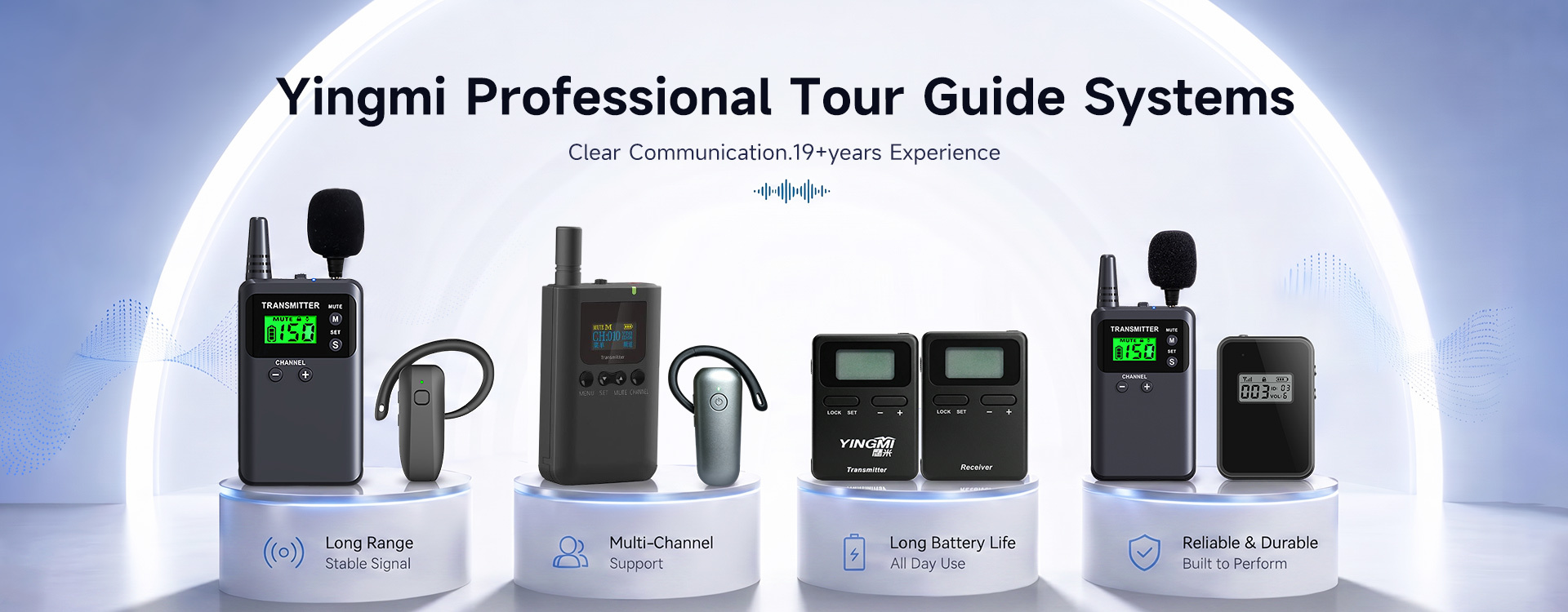
The 008S supports two-way communication, so students can speak to the guide and ask questions during the tour instead of waiting for a break. Its dual-microphone ENC noise reduction helps voices stay clear in busy halls, and 20ms latency keeps the conversation natural, with no awkward delay between a question and its answer. It reaches 100m, enough to cover most museum floors and campus sites, and runs for about 10 hours from a 500mAh battery, charging over Type-C in about 2.5 hours, which suits a full day out with an overnight recharge.
Ground Rules for Young Users
A good system still needs a few rules to work well with students. Agree on when students may speak, so the channel does not fill with chatter. Tell them what the devices are for and what happens if one is lost or damaged. Assign a teacher or helper to oversee the return, and count devices at the end of each stop rather than at the end of the day. These habits are not about the technology itself, but they decide whether the tour feels organized or chaotic.
Before the Bus Leaves
1. Confirm the number of devices matches the group size, with a few spares.
2. Charge everything the night before and check each unit once.
3. Test two-way communication at the venue before the students arrive.
4. Brief the guide and teachers on how to use the speaking function.
5. Plan where devices are stored and charged during the trip.
FAQ
Do students really need two-way communication?
It is the most useful feature for a study tour. It lets students ask questions without calling out across the group, and it helps the teacher and guide stay in contact.
How many devices should we bring?
One for each student and accompanying adult who needs to listen, plus a few spares in case of faults or losses.
Can several school groups use the system in the same venue?
Yes, if the system provides separate channels. Confirm this with the supplier and test it at the venue.
How do we keep students from talking over the guide?
Agree on simple rules before the tour, such as who speaks and when, and let the guide invite questions at planned points.
अधिक देखें
टूर गाइड सिस्टम के लिए ईयर-हुक और हेडसेट रिसीवर के बीच कैसे चुनें?
2026-10-22
उसी कार्यक्रम में, एक मेहमान कहता है कि एक हेडबैंड उसके बालों को चपटा कर देता है, दूसरा कहता है कि कान के अंदर कुछ भी अस्वास्थ्यकर लगता है, और गाइड बस कुछ ऐसा चाहता है जो छह घंटे तक टिका रहे। एक टूर गाइड सिस्टम उन सभी के लिए काम करना चाहिए।
खरीदार आमतौर पर पहले रेंज और बैटरी लाइफ की तुलना करते हैं, और रिसीवर पहनने का तरीका सबसे आखिर में आता है। यह क्रम उन लोगों के लिए उल्टा है जो वास्तव में उपकरण का उपयोग कर रहे हैं। एक आगंतुक थोड़ी कम रेंज को सहन करेगा, लेकिन दो घंटे के लिए असहज फिट को नहीं। रिसीवर शरीर पर कैसे बैठता है, यह तय करता है कि लोग इसे कितनी देर तक पहनते हैं, आपको कितनी बार सफाई करनी पड़ती है, और आप कितनी तेजी से इकाइयों को घुमा सकते हैं। यह गाइड दो पहनने की शैलियों की तुलना करता है जिन्हें अधिकांश टूर ऑपरेटरों को चुनना पड़ता है, ईयर-हूक और हेडसेट, और दिखाता है कि उन्हें अपने स्थल से कैसे मिलाना है।
दो शैलियाँ
ईयर-हूक। रिसीवर या स्पीकर कान के ऊपर टिका रहता है, न कि उसके अंदर। यह ईयरबड की तुलना में कम दखल देने वाला लगता है, पहनने वाले के चलने पर अपनी जगह पर रहता है, और इसे पहनना और उतारना त्वरित है। यह उन दौरों के लिए उपयुक्त है जहाँ आगंतुक बहुत घूमते हैं और उपकरण बार-बार सौंपे और एकत्र किए जाते हैं।
हेडसेट। एक हेड-माउंटेड यूनिट, अक्सर एक बैंड के साथ। यह लंबी अवधि के लिए स्थिर और आरामदायक है, और यह उन लोगों के लिए सामान्य विकल्प है जो इसे घंटों तक पहनते हैं, जैसे कि दुभाषिए और सम्मेलन उपस्थितगण जो पूरे दिन के कार्यक्रम का पालन करते हैं। इसका नुकसान यह है कि इसे समायोजित करने में थोड़ा अधिक समय लगता है और यह चश्मा या स्टाइल वाले बालों वाले लोगों को परेशान कर सकता है।
साथ-साथ
कारक
ईयर-हूक
हेडसेट
समय के साथ आराम
चलते-फिरते दौरों के लिए अच्छा
लंबी अवधि के लिए स्थिर
पहनना और उतारना
त्वरित
धीमा, समायोजन की आवश्यकता है
स्वच्छता प्रबंधन
पोंछना आसान
पोंछना आसान, बैंड गंदगी पकड़ सकता है
समूहों के बीच बदलाव
तेज
मध्यम
संभावित कमियां
यदि फिट खराब है तो ढीला महसूस हो सकता है
चश्मा या हेयर स्टाइल को परेशान कर सकता है
स्थिति के अनुसार शैली का मिलान करना
छोटे, चलने वाले दौरे जिनमें कई अलग-अलग आगंतुक होते हैं।ईयर-हूक। सौंपने की गति और एक घंटे से अधिक का आराम सबसे महत्वपूर्ण है, और समूह लगातार बदलते रहते हैं।
पूरे दिन के सम्मेलन और व्याख्या सत्र।हेडसेट। स्थिरता और कई घंटों से अधिक का आराम गति से अधिक महत्वपूर्ण है, और उपस्थितगण इकाई को लंबे समय तक पहने रहते हैं।
स्वच्छता-संवेदनशील सेटिंग्स।दोनों शैलियाँ कान के अंदर पहने जाने वाली किसी भी चीज़ की तुलना में अधिक आसानी से पोंछी जाती हैं। समूहों के बीच ईयर-हूक को साफ करना तेज होता है, जो तब मदद करता है जब इकाइयों का दिन में कई बार पुन: उपयोग किया जाता है।
मिश्रित दर्शक।कुछ मेहमानों को कोई भी शैली पसंद नहीं आएगी। दूसरे प्रकार की एक छोटी संख्या को हाथ में रखने से किसी को भी दूर करने से बचा जाता है।
यिंगमी रेंज से दो उदाहरण
यिंगमी 008S: हेड-माउंटेड
008S को हेड-माउंटेड पहना जाता है, जो लंबी अवधि के लिए उपयुक्त है जहाँ स्थिरता महत्वपूर्ण है, जैसे कि एक साथ व्याख्या। इसमें डुअल-माइक्रोफ़ोन ENC शोर में कमी, 20ms विलंबता और लगभग 10 घंटे की बैटरी लाइफ है, इसलिए एक पूर्ण सम्मेलन दिवस एक चार्ज से कवर किया जाता है।
यिंगमी L7: ईयर-हूक
L7 एक ईयर-हूक डिज़ाइन का उपयोग करता है, जिसे पहनना त्वरित है और चलते-फिरते आगंतुकों के लिए आरामदायक है। यह UHF पर काम करता है, जिसमें 150 ट्रांसमिट चैनल और 102 रिसीव चैनल हैं, जो एक साथ कई समूह चलाने वाले स्थलों के लिए उपयुक्त है।
सफाई और पहनने का ध्यान न रखें
पहनने की शैली यह भी तय करती है कि आप वर्षों तक क्या बनाए रखेंगे। ईयर हुक, हेडबैंड और पैड घिस जाते हैं और उन्हें बदलने की आवश्यकता होती है, और वे हमेशा मुख्य इकाई के रूप में लंबे समय तक आपूर्ति नहीं किए जाते हैं। पूछें कि क्या बदलने योग्य है और क्या पोंछा जा सकता है। तय करें कि इकाइयों को कब और किससे साफ करना है, पहले शिकायत के बजाय पहले कार्यक्रम से पहले। वापसी डेस्क पर एक साधारण पोंछने की दिनचर्या अधिकांश स्वच्छता चिंताओं को कतार को धीमा किए बिना संभालती है।
जहाँ आप कर सकते हैं वहाँ एक विकल्प प्रदान करें
विविध प्राथमिकताओं का सबसे सरल उत्तर एक छोटा मिश्रण है: अधिकांश मेहमानों के लिए एक मुख्य शैली और उन लोगों के लिए कुछ अन्य जो इसका उपयोग नहीं कर सकते हैं। किसी के गलत फिट के साथ संघर्ष करने के बाद के बजाय, पंजीकरण पर या हैंडआउट डेस्क पर जल्दी पूछें।
अक्सर पूछे जाने वाले प्रश्न
चलने वाले दौरे के लिए कौन सा बेहतर है, ईयर-हूक या हेडसेट?
ईयर-हूक आमतौर पर बेहतर फिट होता है। यह जल्दी से लग जाता है, चलने के दौरान अपनी जगह पर रहता है और समूहों के बीच तेजी से बदलता है।
पूरे दिन के सम्मेलन के लिए कौन सी शैली उपयुक्त है?
एक हेडसेट, क्योंकि यह कई घंटों तक स्थिर और आरामदायक रहता है।
क्या हम एक ही बेड़े में दोनों शैलियों को मिला सकते हैं?
हाँ, जब तक इकाइयाँ एक ही सिस्टम पर काम करती हैं। खरीदने से पहले अपने आपूर्तिकर्ता के साथ संगतता की पुष्टि करें।
समूहों के बीच रिसीवर को कैसे साफ करना चाहिए?
त्वचा को छूने वाले हिस्सों को वापसी डेस्क पर एक उपयुक्त सफाई वाइप से पोंछें, और पहले निर्माता के देखभाल मार्गदर्शन की जाँच करें।
अधिक देखें
What Should You Budget for Spare Units in a Tour Guide System
2026-10-21
It is ten minutes before the group arrives. Three receivers will not power on, one has a cracked case, and one never came back from yesterday's tour. The guide counts what is left and realizes the order was sized for the group, not for the day.
Spare units are the least exciting line in a tour guide system budget and the first one people regret cutting. A fleet that is exactly the size of your largest group has no margin for the ordinary things that go wrong: a battery that does not charge, a unit dropped on a stone floor, a visitor who walks out with a receiver in a coat pocket. This article explains how to think about spares, how to estimate a sensible number for your own operation without relying on a rule of thumb, and how to manage them once you own them.
Where Spare Units Actually Go
Before choosing a number, it helps to know what will consume the spares. In practice there are four drains, and each one behaves differently.
Charging problems. A unit that did not charge overnight, a dock slot with a poor contact, or a battery that has aged. These show up on the morning of an event.
Physical damage. Drops, spills, crushed lanyards and cracked housings. More likely when units are handed to large, busy groups.
Loss. Receivers that are not returned, or are returned to the wrong place. More likely at open-access venues and at events where visitors keep moving.
Time in repair. A unit sent for service is unavailable until it comes back. The longer the repair turnaround, the more spares you need to cover the gap.
A Way to Estimate Your Own Number
There is no universal percentage that fits every operation, and a number borrowed from another venue may be badly wrong for yours. A better approach is to work from your own conditions. Start with the largest group you expect to serve in a single session. Then ask three questions.
1. How often do you run? A venue running daily tours wears units faster and has less time to recover between sessions than one with a few events a year.
2. How long does a repair take? If a unit sent for service is gone for weeks, every faulty unit stays out of your fleet for that long. Longer turnarounds call for more spares.
3. How costly is a shortfall? A corporate reception for senior guests or a booked international delegation cannot tolerate a missing receiver. A casual public tour can. The cost of being short sets how much margin is worth paying for.
Keep a simple log for the first few months: units that failed, were damaged or went missing, and how long each was unavailable. After a season, your own records give a far better estimate than any rule of thumb.
Different Operations, Different Margins
Operation
Main risk to spares
What to prioritize
Daily public tours
Wear, loss, battery aging
Margin for loss and a rotation plan
Occasional large events
Units idle between events, failing on day one
Pre-event testing and spares ready to use
Government and corporate receptions
Zero tolerance for a missing unit
Generous reserve, tested and labeled
Multi-site operators
Units stranded at the wrong site
A shared pool or spares at each site
Long repair turnaround
Faulty units out of service for weeks
Larger reserve, or advance replacement terms
Managing the Spares Once You Own Them
Spare units only help if they are ready when needed. A few habits make that dependable.
Rotate, do not hoard. A spare that sits unused for a year is the one most likely to have a flat battery or an outdated setting. Cycle spares into regular use so wear is spread across the fleet and every unit is exercised.
Number everything. Labeled units make it easy to see which ones fail repeatedly, which have gone missing, and which are on loan.
Keep spares charged and tested. Include them in the nightly charging routine and in the pre-event check, so a spare is a unit you know works.
Store them with the fleet. A spare in a drawer across the building is not a spare when the group is waiting. Keep reserves in the same case or station as the main set.
Charging and Storage Are Part of the Spare Plan
How you charge and store the fleet affects how many spares you need. A case or dock that holds a full set plus reserves keeps everything in one place and makes it obvious when a slot is empty. Poor charging contacts or a mixed collection of cables create exactly the quiet failures that consume spares on the morning of an event. When you plan a fleet, size the charging and storage together with the units.
YingMi L8: Kits With Charging Built In
The YingMi L8 is offered in kits from small groups up to larger sets, with charging docks and charging boxes included as part of the setup. A 2.5-hour charge against 6 to 8 hours of working time keeps overnight turnaround realistic, and the 16g receiver and 98g transmitter are light enough to hand out and collect repeatedly. When choosing a kit, count your spare units as part of the size, so the case or dock you buy has room for them.
The Practical Takeaway
Budget for spares the way you would budget for any buffer: sized to the risk you face, not to a number someone else used. Know where units get consumed, track your own failures for a season, and match the reserve to how costly a shortfall would be. A small, well-managed set of spares is cheap compared with a morning of apologizing to a waiting group.
FAQ
Is there a standard percentage of spares to buy?
No single figure fits every operation. Base the number on your tour frequency, repair turnaround and the cost of a shortfall, then adjust using your own failure records.
Should spares be kept separate from the main fleet?
Store them together so they are quick to reach, but label them and rotate them into regular use so they stay tested and charged.
How does repair turnaround affect the number of spares?
The longer a faulty unit is away, the longer it is missing from your fleet, so slower repairs call for a larger reserve. Ask your supplier about turnaround before you buy.
How can we reduce losses at open-access venues?
Use a clear handout and return routine, number each unit, and keep a record of who has which receiver during each tour.
अधिक देखें
पर्यटन मार्गदर्शिका प्रणाली से विरासत स्थल बहुभाषी पर्यटन कैसे कर सकते हैं?
2026-10-20
एक विरासत स्थल की एक कहानी और कई दर्शक होते हैं। तीन समय क्षेत्रों से आने वाले आगंतुक को उसी स्पष्टीकरण की आवश्यकता होती है जो स्थानीय स्कूल समूह को उनकी अपनी भाषा में चाहिए, बिना साइट को हर उस भाषा के लिए गाइड नियुक्त किए जो गेट से गुजरती है।
अधिकांश विरासत स्थल धीरे-धीरे इस बिंदु पर पहुंचते हैं। पहले दूसरी भाषा में एक मुद्रित पर्चा आता है, फिर कुछ गाइड जो तीसरी भाषा बोलते हैं, फिर एक आने वाला समूह जिसे चौथी की आवश्यकता होती है। एक टूर गाइड सिस्टम उस पैचवर्क को एक योजना में बदल देता है: एक मार्ग, स्टॉप का एक सेट, और प्रत्येक दर्शक के लिए एक भाषा चैनल। यह लेख बताता है कि उस योजना को कैसे बनाया जाए, भाषाओं से शुरू होकर उपकरण तक।
वास्तव में कौन आता है, इससे शुरुआत करें
अनुवादित सामग्री की एक भी पंक्ति लिखने से पहले, अपने आगंतुक मिश्रण को देखें। टिकटिंग रिकॉर्ड, समूह बुकिंग और अतिथि पुस्तकें आपको बताएंगी कि कौन सी भाषाएँ अक्सर आती हैं और कौन सी कभी-कभी। लक्ष्य भाषाओं की एक छोटी सूची है जो आपके अधिकांश आगंतुकों को कवर करती है, न कि एक लंबी सूची जिसे कोई भी बनाए नहीं रख सकता। हर दिन उपयोग की जाने वाली भाषाओं को पूर्ण कवरेज मिलना चाहिए। साल में कुछ बार उपयोग की जाने वाली भाषाओं को मुद्रित गाइड या बुक किए गए लाइव दुभाषिया द्वारा बेहतर सेवा दी जा सकती है।
प्रत्येक प्रकार की यात्रा के लिए एक वितरण मॉडल चुनें
विरासत स्थल आमतौर पर दो बहुत अलग प्रकार की यात्राओं की मेजबानी करते हैं, और एक टूर गाइड सिस्टम एक ही उपकरण के साथ दोनों की सेवा कर सकता है।
यात्रा का प्रकार
भाषाएँ कैसे वितरित की जाती हैं
व्यक्तिगत और छोटे-समूह आगंतुक
स्व-निर्देशित ऑडियो, डिवाइस पर चुनी गई भाषा
गाइड के साथ बड़े संगठित समूह
ट्रांसमीटर पर लाइव गाइड, प्रति भाषा एक चैनल
प्रतिनिधिमंडल और विशेष कार्यक्रम
समर्पित चैनलों पर लाइव गाइड या दुभाषिया
स्व-निर्देशित ऑडियो हर आगंतुक को उनकी अपनी गति से उनकी अपनी भाषा में पूरी कहानी देता है। लाइव चैनल एक गाइड को एक ही आंगन में एक साथ कई भाषा समूहों को संबोधित करने की अनुमति देते हैं, बिना किसी की आवाज उठाए। अधिकांश साइटों को दोनों की आवश्यकता होती है।
इमारत का सम्मान करें
विरासत स्थलों में ऐसी बाधाएं होती हैं जो एक नए कार्यालय या प्रदर्शनी हॉल में नहीं होती हैं। कई लोग संरक्षित दीवारों पर ड्रिलिंग, केबलिंग या दिखाई देने वाले फिक्स्चर की अनुमति नहीं देते हैं, और कुछ ऐतिहासिक कपड़े से जुड़ी या उसके पास रखी जाने वाली चीजों को प्रतिबंधित करते हैं। यह वायरलेस उपकरण को एक स्वाभाविक फिट बनाता है, लेकिन साइट की संरक्षण टीम से यह पुष्टि करना उचित है कि क्या और कहाँ स्थापित किया जा सकता है। छोटे, फ्रीस्टैंडिंग ट्रिगर पॉइंट और हैंडहेल्ड या पहने जाने वाले उपकरण आमतौर पर संरचना से जुड़ी किसी भी चीज़ की तुलना में कम चिंताएं पैदा करते हैं। इसे जल्दी निपटा लें, क्योंकि यह आकार देता है कि आप यथार्थवादी रूप से कितने स्टॉप पेश कर सकते हैं।
सामग्री एक बार लिखें, फिर सावधानी से अनुवाद करें
बहुभाषी दौरे की गुणवत्ता उपकरण पर कम और सामग्री कैसे तैयार की जाती है, इस पर अधिक निर्भर करती है। कुछ आदतें मदद करती हैं:
कान के लिए लिखें। छोटे वाक्य लंबे वाक्यों से बेहतर काम करते हैं, और अनुवादक उन्हें अधिक मज़बूती से संभालते हैं।
नामों को सुसंगत रखें। स्थान के नाम, राजवंश, शासक और तकनीकी शब्दों का हर बार एक ही तरह से अनुवाद किया जाना चाहिए, इसलिए शब्दावली प्रयास के लायक है।
अनुकूलित करें, सिर्फ अनुवाद न करें। स्थानीय आगंतुकों के लिए स्पष्ट संदर्भ दूसरों के लिए संदर्भ के एक वाक्य की आवश्यकता हो सकती है।
अंतिम ऑडियो की समीक्षा मूल वक्ताओं से करवाएं।स्वर और गति शब्दावली के साथ-साथ महत्वपूर्ण हैं।
मार्ग को भाषा-तटस्थ बनाएं
विभिन्न भाषाओं के आगंतुकों को एक ही रास्ते पर चलना चाहिए और एक ही समय पर एक ही स्टॉप पर पहुंचना चाहिए। पहले मार्ग डिजाइन करें, फिर उसमें भाषाएँ जोड़ें। जब मार्ग तय हो जाता है, तो बाद में एक भाषा जोड़ने का मतलब है मौजूदा स्टॉप के लिए नया ऑडियो रिकॉर्ड करना, न कि यात्रा को फिर से डिजाइन करना। ट्रिगर-आधारित प्लेबैक यहाँ मदद करता है, क्योंकि आगंतुक के आने पर प्रत्येक स्टॉप स्वचालित रूप से सही ऑडियो चलाता है, चाहे रिसीवर किसी भी भाषा में सेट हो।
विरासत मार्गों के लिए विचार करने योग्य उपकरण
यिंगमी 007बी
The यिंगमी 007बी में 2.8-इंच एलसीडी स्क्रीन है और यह मैनुअल और स्वचालित ट्रिगरिंग दोनों का समर्थन करता है, इसलिए आगंतुक या तो स्वयं एक स्टॉप का चयन कर सकते हैं या उनके आने पर ऑडियो चला सकते हैं। इसका उपयोग हांगनान गांव में एक ग्रामीण पर्यटन परियोजना में किया गया है। एक निश्चित मार्ग वाले विरासत स्थल और अपनी गति से आगे बढ़ना चाहने वाले आगंतुकों के लिए, वह लचीलापन उपयोगी है: कुछ आगंतुक स्वचालित रूप से मार्ग का पालन करना पसंद करते हैं, अन्य उस स्टॉप पर जाना पसंद करते हैं जिसे वे देखने आए थे।
लॉन्च करने से पहले वास्तविक आगंतुकों के साथ परीक्षण करें
प्रत्येक भाषा के मूल वक्ताओं के एक छोटे समूह को मार्ग पर चलने और ऑडियो सुनने के लिए आमंत्रित करें। उनसे पूछें कि वे कहाँ भ्रमित थे, ऑडियो कहाँ बहुत लंबा लगा और कौन से नाम गलत लगे। जनता के लिए खोलने से पहले उन बिंदुओं को ठीक करें। एक बहुभाषी दौरा जो हर भाषा में स्वाभाविक लगता है, वह असमान गुणवत्ता वाली भाषाओं की एक लंबी सूची की तुलना में अंतरराष्ट्रीय आगंतुकों के साथ अधिक विश्वास पैदा करता है।
अक्सर पूछे जाने वाले प्रश्न
एक विरासत स्थल को कितनी भाषाएं पेश करनी चाहिए?
उन भाषाओं से शुरुआत करें जिनका आपके आगंतुक वास्तव में उपयोग करते हैं, टिकटिंग और समूह बुकिंग रिकॉर्ड के आधार पर, और केवल तभी विस्तार करें जब आप गुणवत्ता बनाए रख सकें।
क्या एक ही सिस्टम स्व-निर्देशित आगंतुकों और निर्देशित समूहों दोनों की सेवा कर सकता है?
हाँ। कई साइटें व्यक्तियों के लिए स्व-निर्देशित ऑडियो और एक ही उपकरण बेड़े के साथ संगठित समूहों के लिए लाइव चैनल का उपयोग करती हैं।
क्या हमें एक संरक्षित स्थल पर ट्रिगर पॉइंट स्थापित करने की अनुमति की आवश्यकता है?
अक्सर हाँ। साइट की संरक्षण टीम के साथ जल्दी जांच करें, और फ्रीस्टैंडिंग या गैर-आक्रामक प्लेसमेंट को प्राथमिकता दें।
हम बाद में एक नई भाषा कैसे जोड़ते हैं?
यदि मार्ग और स्टॉप तय हैं, तो आप मौजूदा स्टॉप के लिए नया ऑडियो रिकॉर्ड करते हैं। स्क्रिप्ट और शब्दावली को व्यवस्थित रखकर इसे शुरू से ही योजना बनाएं।
अधिक देखें
?
2026-10-19
आधे दर्शक कमरे में हैं और आधे स्क्रीन पर हैं। ऑनलाइन आधे को मीटिंग प्लेटफॉर्म के माध्यम से व्याख्या मिलती है। कमरे में आधे को अभी भी इसे सुनने की आवश्यकता है, और एक टूर गाइड सिस्टम अक्सर इसे करने का सबसे शांत, सबसे सस्ता तरीका होता है।
हाइब्रिड सम्मेलनों ने इवेंट टीमों की योजना को बदल दिया है। वीडियो प्लेटफॉर्म दूरस्थ प्रतिनिधियों को संभालता है, लेकिन यह बारहवीं पंक्ति में बैठे व्यक्ति के लिए कुछ भी नहीं करता है जिसे अपनी भाषा में दुभाषिए की आवाज की आवश्यकता होती है। वह अंतिम खिंचाव, दुभाषिए से श्रोता के कान तक, वही है जिसके लिए एक वायरलेस टूर गाइड सिस्टम बनाया गया था। यह लेख बताता है कि यह हाइब्रिड इवेंट में कहाँ फिट बैठता है, इसे क्या संभालना चाहिए और क्या नहीं, और पहले सत्र शुरू होने से पहले क्या जांचना चाहिए।
पहले सीमा बनाएं
योजना बनाने में सबसे उपयोगी कदम यह स्पष्ट करना है कि कौन किस चीज के लिए जिम्मेदार है। एक टूर गाइड सिस्टमशारीरिक रूप से उपस्थित लोगों की सेवा करता है। ऑनलाइन प्रतिनिधियों को मीटिंग प्लेटफॉर्म द्वारा प्रदान किए जाने वाले किसी भी व्याख्या फ़ंक्शन द्वारा सेवा दी जाती है। दोनों पक्ष एक ही दुभाषियों और एक ही स्रोत भाषण साझा करते हैं, लेकिन वे विभिन्न वितरण पथों का उपयोग करते हैं।
इनको मिलाने से इवेंट महंगे प्लेटफॉर्म फीचर के साथ समाप्त हो जाते हैं जिनका कमरे में कोई भी उपयोग नहीं कर सकता है, या रिसीवर से भरा कमरा और उन्हें फीड करने का कोई स्पष्ट तरीका नहीं है।
दर्शक
वे व्याख्या कैसे सुनते हैं
कमरे में
भाषा चैनल पर वायरलेस रिसीवर
ऑनलाइन
मीटिंग प्लेटफॉर्म के अपने भाषा चैनल
दुभाषिए
दोनों पथों को एक ही स्रोत ऑडियो से फीड करें
दुभाषिए कहाँ बैठते हैं
पहला व्यावहारिक निर्णय यह है कि दुभाषिए स्थल पर काम करते हैं या दूर से। व्यक्तिगत दुभाषिए आमतौर पर मंच के पास एक बूथ या मेज पर काम करते हैं, और उनका आउटपुट सीधे ट्रांसमीटर तक जाता है। दूरस्थ दुभाषिए इंटरनेट पर अपना ऑडियो भेजते हैं, इसलिए इवेंट टीम को उस ऑडियो को स्थल में और ट्रांसमीटर में लाने का एक विश्वसनीय तरीका चाहिए। किसी भी तरह से, दर्शकों में रिसीवर केवल एक चीज जानते हैं: व्याख्या की गई आवाज वाला एक चैनल। उस हिस्से को सरल रखना ही इन-रूम अनुभव को भरोसेमंद बनाता है।
विलंब आपकी सोच से अधिक मायने रखता है
एक हाइब्रिड कमरे में, प्रतिनिधि एक साथ वक्ता और दुभाषिए को सुनते हैं। वक्ता के होंठों और अनुवादित आवाज के बीच किसी भी ध्यान देने योग्य देरी से सुनना थकाऊ हो जाता है, और प्रभाव तब मजबूत होता है जब वक्ता एक बड़ी स्क्रीन पर भी हो। वायरलेस ट्रांसमिशन अपनी छोटी देरी जोड़ता है, इसलिए यह जांचने लायक है कि एक सिस्टम क्या योगदान देता है। उदाहरण के लिए, YingMi 008S को 20ms विलंबता पर निर्दिष्ट किया गया है, जो इतना छोटा है कि इसे श्रृंखला में कमजोर कड़ी नहीं होना चाहिए। हाइब्रिड इवेंट में बड़ी देरी आमतौर पर इंटरनेट पथ से आती है, न कि कमरे से।
एक ऐसे कमरे में ध्वनि की गुणवत्ता जो एक स्टूडियो भी है
हाइब्रिड कमरों में अतिरिक्त उपकरण होते हैं: कैमरे, स्क्रीन, एक लाइव स्ट्रीम, कभी-कभी दूरस्थ प्रतिभागियों के लिए माइक्रोफ़ोन सेटअप का दूसरा सेट। वायरलेस व्याख्या चैनल को विकृत नहीं करना चाहिए या उन संकेतों के साथ प्रतिस्पर्धा नहीं करनी चाहिए। 008S को 1% से कम विकृति पर निर्दिष्ट किया गया है और यह डुअल-माइक्रोफ़ोन ENC शोर रद्दीकरण का उपयोग करता है, जो दुभाषिए की आवाज को स्पष्ट रखने में मदद करता है जब बूथ या मेज पूरी तरह से शांत नहीं होती है। जो भी सिस्टम आप चुनते हैं, उसे इवेंट से पहले, वास्तविक कमरे में रिसीवर के माध्यम से, लाइव स्ट्रीम चलने के साथ सुनें।
कवरेज और बैठने की व्यवस्था
अधिकांश सम्मेलन कक्ष आधुनिक वायरलेस सिस्टम की सीमा की तुलना में छोटे होते हैं। 008S को 100 मीटर पर निर्दिष्ट किया गया है, जो आराम से एक मानक बॉलरूम या सभागार को कवर करता है और पास के ओवरफ़्लो बैठने या ब्रेकआउट स्थान के लिए जगह छोड़ता है। बिंदु उस सीमा का पूरा उपयोग करना नहीं है, बल्कि यह विश्वास करना है कि पीछे के कोने में एक सीट को सामने की पंक्ति के समान गुणवत्ता सुनाई देती है। सेटअप के दौरान रिसीवर के साथ कमरे में घूमें और कोनों की जांच करें।
रिसीवर को संभालना
हाइब्रिड इवेंट में उपस्थिति असमान होती है। कुछ पंजीकृत उपस्थित घर पर रहते हैं, और कुछ दिन के दौरान आते हैं। प्रवेश द्वार के पास एक सरल हैंडआउट और संग्रह दिनचर्या की योजना बनाएं, और रिसीवर का एक छोटा सा भंडार चार्ज और तैयार रखें। बैटरी पर, 008S को 500mAh बैटरी से लगभग 10 घंटे के उपयोग के लिए निर्दिष्ट किया गया है और यह लगभग 2.5 घंटे में टाइप-सी पर चार्ज होता है, जो एक पूर्ण-दिवसीय कार्यक्रम के लिए रात भर रिचार्ज के साथ उपयुक्त है। सुनिश्चित करें कि चार्जिंग योजना आपके शेड्यूल से मेल खाती है, खासकर बहु-दिवसीय सम्मेलनों के लिए।
एक छोटी सेटअप चेकलिस्ट
1. पुष्टि करें कि कमरे में किसे किस भाषा की आवश्यकता है, और तदनुसार चैनलों की संख्या निर्धारित करें।
2. तय करें कि दुभाषिए स्थल पर हैं या दूर से, और योजना बनाएं कि उनका ऑडियो ट्रांसमीटर तक कैसे पहुंचेगा।
3. हस्तक्षेप और गूंज को पकड़ने के लिए लाइव स्ट्रीम चलने के साथ इन-रूम चैनल का परीक्षण करें।
4. कोनों और किसी भी ओवरफ़्लो क्षेत्र सहित, रिसीवर के साथ कमरे में घूमें।
5. हैंडआउट और वापसी दिनचर्या तैयार करें, साथ ही चार्ज किए गए स्पेयर भी।
6. तकनीकी टीम को ब्रीफ करें कि कौन कमरे के चैनल को संभालता है और कौन प्लेटफॉर्म को संभालता है, ताकि समस्याएं जल्दी से सही व्यक्ति तक पहुंचें।
व्याख्या के लिए निर्मित एक प्रणाली
YingMi 008S
YingMi 008S को एक साथ व्याख्या सेटिंग्स के लिए डिज़ाइन किया गया है। इसमें 20ms विलंबता, 100m रेंज, 1% से कम विकृति और डुअल-माइक्रोफ़ोन ENC शोर रद्दीकरण है, जिसमें लगभग 10 घंटे की बैटरी लाइफ 500mAh बैटरी से और लगभग 2.5 घंटे में टाइप-सी चार्जिंग है। हाइब्रिड सम्मेलनों के लिए, वह संयोजन इन-रूम पक्ष को कवर करता है: एक स्पष्ट, कम-विलंबता व्याख्या की गई चैनल जो इंटरनेट पर निर्भर नहीं है।
अक्सर पूछे जाने वाले प्रश्न
क्या टूर गाइड सिस्टम मीटिंग प्लेटफॉर्म की व्याख्या को बदल देता है?
नहीं। यह कमरे में लोगों की सेवा करता है। ऑनलाइन प्रतिनिधियों को अभी भी प्लेटफॉर्म के भाषा चैनलों का उपयोग करना चाहिए।
क्या दूरस्थ दुभाषिए इन-रूम सिस्टम को फीड कर सकते हैं?
हाँ, जब तक कि उनका ऑडियो स्थल में लाया जाता है और ट्रांसमीटर से जुड़ा होता है। इवेंट से पहले उस पथ और उसकी देरी का परीक्षण करें।
हमें हाइब्रिड इवेंट के लिए कितने रिसीवर की आवश्यकता है?
कुल पंजीकरणों के बजाय, व्याख्या की आवश्यकता वाले इन-रूम उपस्थित लोगों की संख्या, साथ ही कुछ स्पेयर के लिए योजना बनाएं।
हमें इवेंट से पहले क्या परीक्षण करना चाहिए?
लाइव स्ट्रीम चलने के साथ चैनल का परीक्षण करें, कमरे के कोनों की जांच करें, और पूरे कार्यक्रम के लिए बैटरी योजनाओं की पुष्टि करें।
अधिक देखें